Older Than Israel, Still Standing
They stood there long before Israel existed.
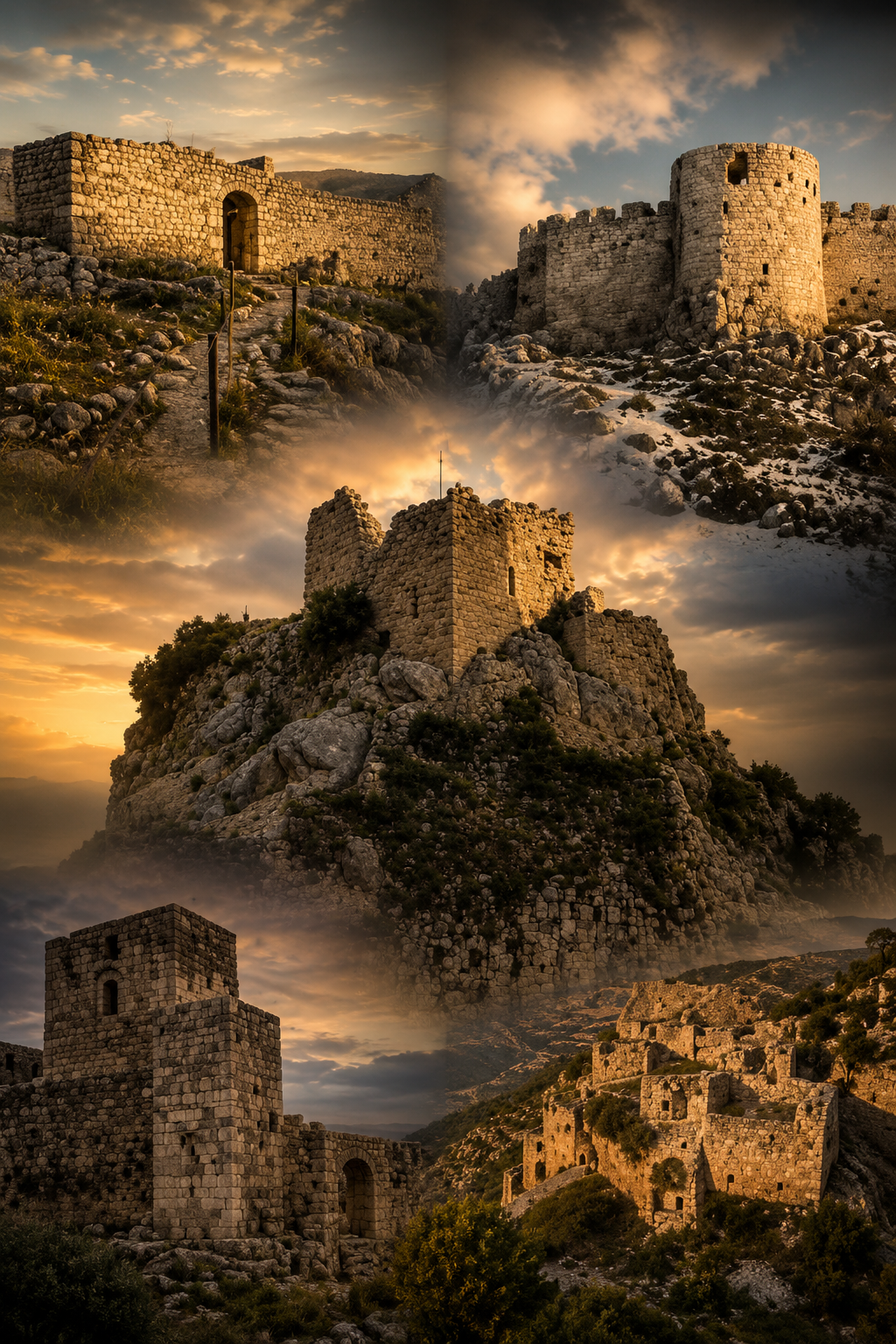
Across the hills of South Lebanon, five castles have watched armies arrive, occupations end and empires disappear. Crusaders, Ayyubids, Mamluks, Ottomans and local rulers all passed through Jabal Amel. Each left something behind: a tower, a wall, an entrance, a scar.
The castles remained.
On 24 July 2026, UNESCO inscribed them on the World Heritage List under the official name “Mount Amel Castles.” In the same decision, the organisation placed them on the List of World Heritage in Danger because of the damage they have suffered and the continuing threats created by the armed conflict in Lebanon.
The decision was taken during the 48th session of the World Heritage Committee in Busan, South Korea. Lebanon had requested an emergency inscription only one month earlier, on 23 June, because the five sites were facing immediate danger. UNESCO approved the nomination under criteria recognising both the exchange of architectural traditions and the importance of the castles as examples of fortified architecture. UNESCO’s official decision
This is not simply another international title for Lebanon.
It is an acknowledgment that the history preserved in South Lebanon belongs to humanity—and that this history is now under threat.
Nearly One Thousand Years of History
The five castles are not isolated monuments. Together, they formed a defensive and administrative network across Jabal Amel.
Built on hilltops and elevated ridges, they controlled roads, communication routes, farmland and movement between the Mediterranean coast and the Lebanese interior. Their walls record centuries of contact between European and Near Eastern military traditions.
UNESCO describes the castles as evidence of the evolution of defensive architecture from the medieval period until the nineteenth century. Their towers, gates, residential quarters and fortifications carry the influence of Crusader, Ayyubid, Mamluk, Ottoman and local Lebanese rulers. UNESCO World Heritage Centre
But UNESCO language alone cannot explain what these castles mean to the South.
For the people of Jabal Amel, they have never been distant archaeological sites. They are part of the landscape. People grew up beneath them, saw them from their balconies, passed them on the road and learned their stories from parents and grandparents.
They are not foreign monuments standing on Lebanese land.
They are part of Lebanon.
Qalaat al-Shaqif — Beaufort Castle
Qalaat al-Shaqif rises above the Litani River near Arnoun, occupying one of the most strategic positions in South Lebanon.
Its location allowed whoever controlled it to watch the surrounding valleys and the routes connecting the coast with the interior. Different rulers expanded, rebuilt and adapted the fortress over centuries, turning it into one of the most important examples of medieval military architecture in the region.
But Beaufort is not only a witness to ancient history. It is also a witness to modern occupation.
Israel occupied the castle and transformed the surrounding area into a military position before withdrawing from most of South Lebanon in 2000. In 2026, Israeli forces seized the area again during their invasion and remained inside an occupation zone that Lebanese authorities could not access to assess the damage.
Israel also objected to the castle’s UNESCO inscription, claiming that Hezbollah had used the site for military purposes. Lebanon rejected that allegation and maintained that the castle had been used exclusively for cultural and tourism activities since the Israeli withdrawal in 2000. Associated Press
Once again, a Lebanese historical monument found itself on the frontline.
Qalaat Tibnin — Toron Castle
At the centre of Tebnine stands Qalaat Tibnin, known historically as Toron Castle.
The fortress was established during the Crusader period and later modified under Ayyubid and Mamluk rule. Its structure reflects the many powers that controlled the region, but its identity today is inseparable from Tebnine and its people.
During Israel’s recent military campaign, the town was subjected to heavy bombardment. The attacks raised serious fears for the castle, particularly after part of one of its medieval walls had already collapsed during the 2024 war.
The castle survived centuries of conflict.
That should never be treated as permission to expose it to another.
Qalaat Chakra — Dubieh Castle
Dubieh Castle stands near Shaqra, within the landscape of Wadi al-Hujair.
It may be smaller and less internationally known than Beaufort or Tebnine, but its importance lies in the role it played within the wider network of Jabal Amel. From its elevated position, it helped control the valleys and routes running through the region.
Its location within the Wadi al-Hujair Nature Reserve now gives it an additional layer of protection. Yet no legal designation can physically shield a monument from bombs, bulldozers or military occupation.
Like the other four castles, Dubieh was granted enhanced protection by UNESCO in November 2024. That status is supposed to offer the highest level of international protection available to cultural property during armed conflict.
The danger did not disappear.
Qalaat Deir Kifa — Maron Castle
Near Deir Kifa stands Maron Castle, one of the least publicly known of the five sites.
Its remains preserve another chapter of the military and architectural history of Jabal Amel. It was not built to stand alone. It formed part of the chain of fortifications that allowed rulers to observe the land, communicate across distances and defend the approaches to the South.
Its international recognition matters precisely because monuments outside the usual tourist routes are often the easiest to neglect.
A site should not need to be famous before its destruction is considered a loss.
Qalaat Chama’ — Chamaa Castle
Chamaa Castle rises near the southern Lebanese coast, overlooking the plains leading towards Tyre.
The citadel has endured repeated Israeli attacks. It was damaged during Israel’s 2006 war on Lebanon and again during the Israeli assault in 2024. Lebanese reports later warned of further destruction caused by military operations and bulldozing around the site.
In 2026, UNESCO said it was deeply alarmed by reports of damage to the castle. Lebanon’s Culture Ministry also warned that the destruction of heritage sites across the South was not incidental but part of a broader pattern threatening the historical identity of entire towns and villages. Reuters
Chamaa is a reminder that historical sites are not protected simply because the world declares them important.
Protection means nothing without accountability.
Heritage Under Israeli Attack
The UNESCO inscription came after one of the most destructive periods for cultural heritage in modern Lebanese history.
Israel’s air and ground campaign damaged historic sites across South Lebanon. Ancient structures in Tyre were struck. Nabatieh’s historic market was devastated. Religious sites were destroyed. Centuries-old border villages were bulldozed, while Israeli occupation prevented Lebanese experts from reaching some areas and conducting full damage assessments.
The five castles had already received UNESCO’s enhanced protection in November 2024. Yet all five subsequently suffered damage or faced threats serious enough for UNESCO to approve their emergency inscription on the List of World Heritage in Danger.
These castles are made of stone.
But what they preserve is far more fragile.
They hold the memory of the people who built them, defended them, lived around them and carried their stories from one generation to another. When a historic monument is bombed, occupied or bulldozed, the loss cannot be measured only in broken walls.
An attack on heritage is also an attack on memory.
Older Than the State Bombing Them
By the time Israel was established in 1948, the castles of Jabal Amel had already stood over South Lebanon for centuries.
They witnessed the Crusades.
They witnessed the Ayyubids and the Mamluks.
They witnessed Ottoman rule.
They witnessed the creation of modern Lebanon.
They witnessed Israeli invasions and occupations.
And they are still standing.
This does not make them indestructible. It makes their protection more urgent.
Israel cannot erase the Lebanese identity of the South by destroying its villages, occupying its land or attacking the monuments that testify to its history. These castles are physical evidence that Jabal Amel has a history far older than the state now threatening it.
The stones remember what politics attempts to deny.
A Lebanese Achievement
The UNESCO inscription is the result of work by Lebanese archaeologists, historians, diplomats, local municipalities, the Ministry of Culture and the Directorate General of Antiquities.
It is an important victory for Lebanon at a time when the country’s land and heritage remain under attack.
The decision also challenges the narrow international image of Lebanon’s history. Lebanon’s cultural importance does not end with the Phoenician cities of Byblos, Sidon and Tyre. It is also found in the villages and hills of Jabal Amel, in places that have too often been treated only as battlefields in foreign news reports.
South Lebanon is not merely a frontline.
It is a land of history, culture and memory.
The world has now formally recognised what the people of the South have always known: Beaufort, Tebnine, Dubieh, Deir Kifa and Chamaa are not abandoned ruins.
They are witnesses.
They are part of Lebanon’s identity.
They are part of the history of Jabal Amel.
And now they are part of the shared heritage of humanity.
They survived empires, invasions and occupations.
Our responsibility is to make sure they survive Israel too.